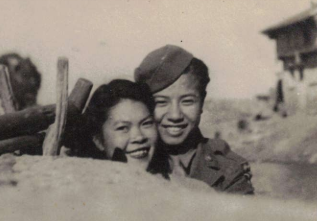
| This is fourth in a series of posts about being in hedgehog mode(opens in new tab), as I write a book about my ancestors. In this post, I provide a glimpse of what I’ve been working on for the last year, including writing about my mother’s immigration journey in 1947, from Hong Kong to San Francisco to New York City. My father, James, met her ship in San Francisco. After a week of sightseeing in the City By the Bay, James and Jean traveled by train in a Pullman car across America, headed for New York City’s Chinatown, where they would be married and make their home together.
If you missed a post from this series, here they are:
Part 1: I’m in Hedgehog Mode(opens in new tab)
Part 2: I Didn’t Expect This(opens in new tab)
Part 3: Gifts From Being In Hedgehog Mode(opens in new tab)
———
“I didn’t know anybody…I didn’t understand the environment…Felt like I fell way down.”
Jean had barely been in the United States for two weeks. As a new immigrant, she had seen a lot more of America than most Americans saw in their lifetime. It was eye-opening to see the vastness and diversity of her new country. And yet, the biggest surprise was when she arrived in New York City.
Jean described her experience:
“When I first got to New York, I didn’t like it too well. In Chinatown all the buildings were old. In the building where we lived, it was very dark, on the fourth floor. The drunks used to sleep under the stairs, because it was close to the Bowery. Our apartment had only one bedroom, and the other room was the kitchen, living room, and bathroom, all together. There was a toilet inside the bedroom.”

Jean in her Chinatown apartment, circa 1947.
It was a harsh landing after crossing the U.S. in the refined atmosphere of a Pullman car. Even living in Asia during wartime, Jean never felt like she lived in squalor. She noted that, “In China, I always lived in a nice building.”
Now, she was living among Chinese who had little formal education working as waiters, cooks, and laundrymen, in crowded tenement conditions stripped of beauty or dignity, with few women and many middle-aged bachelors. They lived next door to a mustard factory and over time, Jean developed headaches. On top of this, the language barrier made everything harder. Residents of Chinatown spoke Taishanese, not Jean’s native Cantonese. Jean was with the people of her homeland and it didn’t matter. She felt lonely and isolated. This was no place to find a new best friend.
James had been around laundries for much of his life in the U.S. The lifestyle of the immigrant bachelor was familiar to him. He spoke the language, knew the type of people who emigrated from Taishan County in China, and worked and slept in laundries. Having his own space, even in a tenement building, was a step up for him.
My parents came from very different backgrounds. What made it work? James saw Jean as “his queen”, marrying above his station in life and playing into his ambition to be more than a poorly paid and overworked laborer, ironing shirts for twelve hours a day. The Army had shown him that he could learn new things and do technical work that used his brain. He believed that he could be someone different from his past. Instead of identifying himself as a laundry worker on his marriage license, he wrote “clerk”, which was one step closer to a white-collar job. Jean supported his aspirations. He could see that once she committed to something, she was all in. It was a good thing to be wildly in love with someone who was so loyal.
And what did Jean see in James? It’s true that she wasn’t head over heels in love with James–not in the same way that she was with her first love, Kuangyu. Instead, she saw a handsome man who knew what he wanted in life, and had the confidence and competence to go after it. James was smart, decisive and resourceful. No project was too complicated or daunting. He was comfortable moving between the grittiness of Chinatown with its rough Taishanese dialect and the Westernized culture of the English-speaking parts of New York City.
James didn’t let his circumstances define him and Jean liked that. Unfortunately, this could also lead to false impressions. His charm masked his humble origins. Jean had no way of knowing when they were courting in Kunming, China that this Army veteran and native-born American was starting from the bottom rung of society.
What mattered most to Jean, even if she wasn’t fully conscious of it, was that she felt safe with James. He was an honest, hard-working man. She knew that she would be taken care of.
Both had faced hardships at a young age, without the support of their parents by the tender age of 9. Their early experiences left wounds that would be unhealed for the rest of their lives. For James, when he felt frustrated and powerless, his amiable demeanor turned to rage. It was his way of regaining agency, even though it scared those around him. Jean’s childhood had ingrained in her a victim mentality when situations became challenging. Coping meant keeping everything inside, bracing oneself, and waiting out the difficulties. She chose to freeze, rather than fight or flee.
Having to navigate life at an early age wasn’t all bad. Both Jean and James came through their childhood and adolescence with more resilience and self-authority. No matter what was in store for their marriage, they could manage, together.
———-
Writing about my parents early life has made me grateful for the hardships that they went through. Without their grit, I would not exist. In my next post, I’ll provide an excerpt describing my parents’ wedding, with an unusual twist. |